
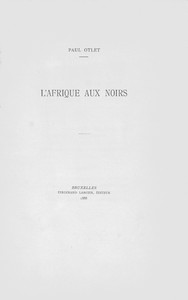
L'Afrique aux Noirs by Paul Otlet
(10 User reviews)
862
Otlet, Paul, 1868-1944
French
"L'Afrique aux Noirs" by Paul Otlet is a political and social discourse written in the late 19th century. The book delves into the complex themes surrounding the African diaspora, specifically focusing on the aspirations of African Americans for a return to Africa and the role of European colonizers in this context. Otlet presents a combination of ...
the text, Otlet discusses the emergence of Gilles Moss, a self-proclaimed "Black Moses," who inspires African Americans to seek repatriation to Africa. He outlines the historical plight of the African diaspora, highlighting the struggle for identity and belonging following their emancipation in the United States. Otlet argues for the responsibility of Europeans, particularly the Belgians, to facilitate this repatriation and to provide assistance in establishing a civilization in Africa led by its people. He envisions a future where African Americans contribute to the development of the Congo, blending African heritage with the progress of European civilization, ultimately summarizing his vision with the rallying cry, "L'Afrique aux noirs!" (This is an automatically generated summary.)
Richard Baker
4 weeks agoI didn't expect much, but the presentation feels refined and carefully planned. Simply brilliant.
Joseph Hernandez
5 months agoAs an avid reader, the explanations feel carefully crafted rather than rushed. This turned out to be a great decision.
Nancy Perez
2 weeks agoThis immediately felt different because the material feels polished and professionally edited. I learned so much from this.
Steven Lewis
3 months agoAs someone who reads a lot, the author clearly understands the subject matter in depth. I'm sending the link to all my friends.
There are no comments for this eBook.








Melissa Thomas
5 months agoI almost skipped this one, yet the author demonstrates strong mastery of the topic. Worth every second of your time.